The World That
Made Shakespeare

Every Renaissance begins with patrons who believe that ideas are worth investing in.

Prologue

William Shakespeare was not a lone genius.

The remarkable art we revere as Shakespeare’s was made possible and shaped by a fascinating network of women and men who offered support, scholarship, creativity, diplomacy, and a vital exchange of ideas to the playwright. Their story is yet untold.

The Renaissance was not created by artists alone. It was made possible by patrons who believed that ideas were worth investing in — who funded thinkers, preserved knowledge, and created the conditions in which writers, philosophers, scientists, diplomats, and explorers transformed a culture.

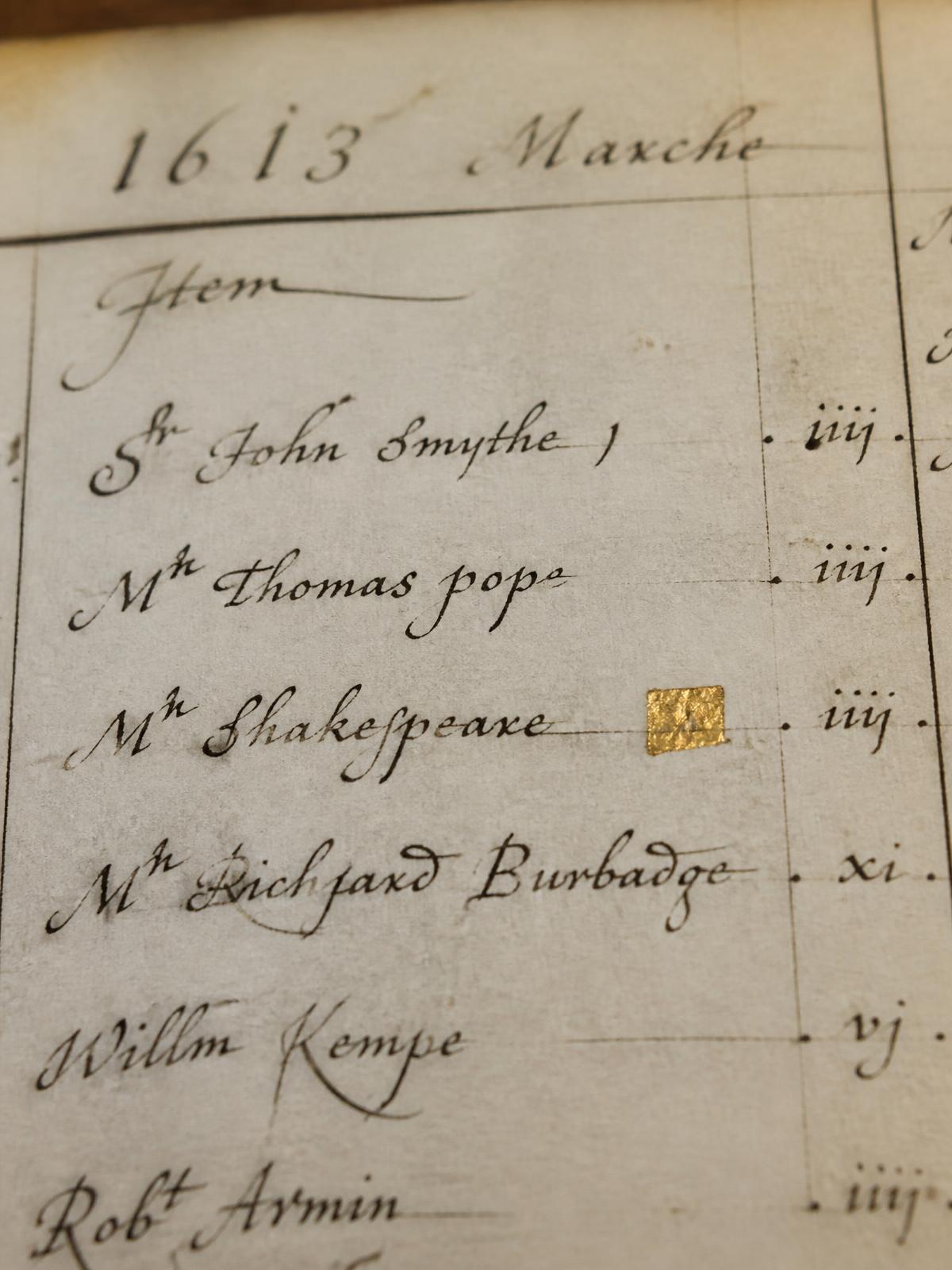
Belvedere begins with a single surviving document: the only known record of a payment made to William Shakespeare by one of his patrons.

What begins with one document becomes an invitation to rediscover an entire world.

Mission

Following a question wherever it leads

Belvedere is a nonprofit research and cultural preservation organization dedicated to digitizing, studying, and interpreting the historical archives of William Shakespeare’s patrons and the wider intellectual and cultural networks of Renaissance England and Europe.

Belvedere believes that preserving cultural heritage is an act of public service. By safeguarding historical archives and supporting open-ended, multidisciplinary research, Belvedere creates the conditions for discoveries that deepen our understanding of creativity, culture, and our shared humanity.

History is never complete. Across Europe, extraordinary archives remain unexplored, uncatalogued, or inaccessible. Every archive has the potential to reveal new voices, new connections, and new perspectives on the world that shaped Shakespeare.

Belvedere is founded on a simple belief

No idea exists in isolation.

By understanding the world that shaped Shakespeare, Belvedere explores a timeless question: how do ideas move through culture?

The discoveries that emerge are not only about the Renaissance — they invite us to think more deeply about the conditions that foster imagination, creativity, and human flourishing in every generation.

The patrons of the Renaissance invested in the creation of culture.

The patrons of Belvedere invest in preserving its history — and in making the next discovery possible.

Practice

We preserve. We investigate. We tell the story.

Belvedere pursues three charitable purposes: the preservation of cultural heritage, the advancement of scholarly research, and public education. All findings are published and made available for public benefit.

I

Preserve

Cultural heritage preservation

We preserve cultural heritage by photographing, filming, and documenting historically significant archives — creating a permanent visual record that supports future research, education, and public understanding.

II

Investigate

Scholarly research

We advance open-ended, multidisciplinary research into these archives. Alongside high-resolution imaging, we translate and transcribe these records with manuscript experts such as Professor Carlo M. Bajetta, and work with scientists exploring their provenance through genealogy and DNA, including research by Dr Turi King — holding our conclusions to documented evidence and published methods.

III

Tell the story

Public education

We share what we find — through documentaries, exhibitions, and partnerships with cultural institutions — so discoveries reach children and inspire them to think differently, limitlessly, about their own story and how it can be revisited.

Macro detail of a Renaissance household ledger showing an entry naming Mr. Shakespeare
A household account · c. 1613
Archive

Somebody paid Shakespeare. Somebody wrote it down.

One line in a patron’s household accounts — the only known record of a payment made to William Shakespeare. Four centuries later it is still there, in ink, waiting.

A receipt is a small thing. But a receipt means two people met. And once you start wondering who the other person was, the whole age begins to move.

One document leads to one patron.

One patron leads to one family.

One family opens a network stretching across Europe.

Artists.Scientists.Philosophers.Diplomats.Explorers.

Suddenly the Renaissance no longer feels like the story of one genius.

It begins to feel like a conversation.

History is never complete. Across Europe, extraordinary archives remain unexplored, uncatalogued, or inaccessible. Every letter, manuscript, account book, and work of art has the potential to reveal new voices, new connections, and new perspectives — among them the stories of remarkable women and men whose contributions to the Renaissance have yet to be fully understood.

Why Now

Preservation is not about holding on to the past

Archives are fragile, dispersed, and quietly disappearing. Every year, letters and account books are lost, sold apart, or left unread — and with them the evidence of who knew whom, who paid for what, and where an idea first travelled.

Cultural preservation and archival research take us back to the source of the story. Not to fix it in place, but to release it: when the record is safe and legible, new readings become possible, and stories nobody has told yet can finally emerge.

This is the Shakespeare resonance — the way a single line of ink connects a place to a person, a person to a household, a household to a continent of ideas. Once you can see those connections between places, people and things, imagination has somewhere limitless to go.

So this is not a monument. It is an invitation to participate.
Philosophy

Blue Skies, Endless Imagination

Blue-skies thinking is the freedom to look up from the archive and imagine the world that produced it — then go looking for it, unhurried by conclusions and unbounded by discipline.

By preserving cultural heritage and expanding access to historical knowledge, Belvedere seeks to deepen our understanding of how great ideas emerge, how cultures are transformed through the exchange of knowledge, and how curiosity and intellectual freedom expand our capacity for creativity, empathy, and human connection.

Every archive is a room where the lights have been off for centuries. We are only opening the door.

Reflection

If you have followed the trail this far, you may already have noticed what happened along the way.

How we think about one thing becomes how we think about everything.

A receipt taught us to ask who paid. Asking who paid taught us to ask who else they knew, what they read, and where they travelled. The habit of looking closely at one small thing turns out to be the habit of looking closely at everything. Curiosity creates culture. It always has.

To be, or not to be.

That is the question every generation asks itself again — in its own language, on its own terms.

Every generation inherits a culture it did not create — and shapes the one it will leave behind.